
Profiles & Bios
How to Create a Dating Profile
A good dating profile makes it easy for another person to understand three things quickly: what you look like, what your life is actually like, and what kind…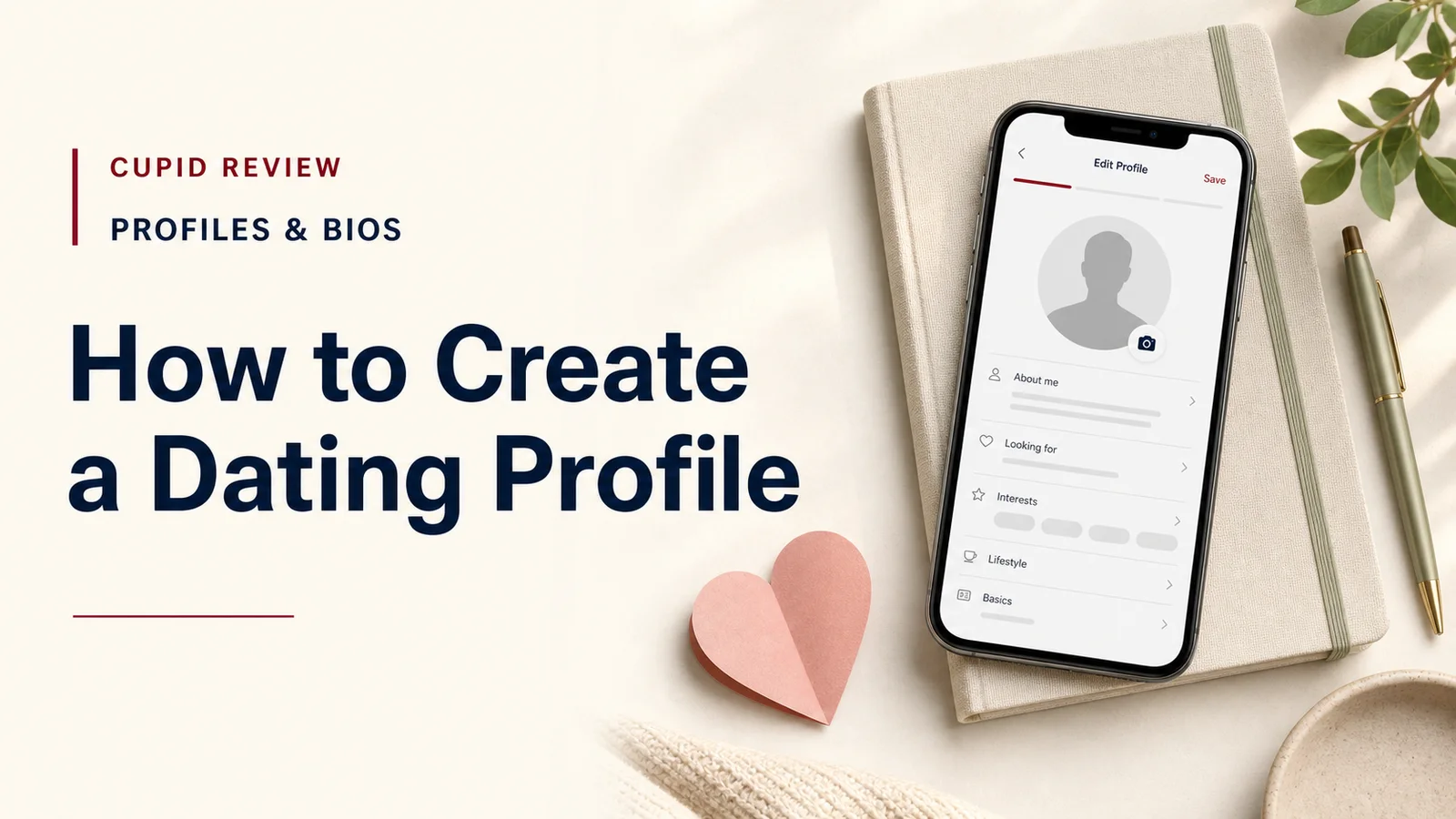
Short answer
A good dating profile makes it easy for another person to understand three things quickly: what you look like, what your life is actually like, and what kind of connection you want. Use recent photos, write a short bio with specific details rather than generic adjectives, complete the fields that affect compatibility, and remove anything that creates confusion or asks a match to do all the conversational work.
Decide what the profile is supposed to attract
Before choosing photos or writing prompts, decide what you want the profile to do. A profile for a serious relationship should make lifestyle and relationship goals easier to understand. A profile for casual dating can be lighter, but it still benefits from clarity. If you are open to several outcomes, say that honestly rather than selecting every option and hoping matches interpret it correctly.
Choose a clear first photo
Your first photo should make identification effortless. Use a recent image where your face is visible, lighting is good, and there is no need to guess which person in a group you are. Avoid leading with sunglasses, a distant full-body shot, a heavily filtered image, or a photo cropped from a past relationship. The first image is not supposed to tell your whole story; it is supposed to establish who the profile belongs to.
Build a photo set that adds information
After the first photo, use variety. A useful set might include a full-body photo, an activity you genuinely do, a social photo where you are still easy to identify, and one image that gives someone a natural conversation hook. Repeating nearly identical selfies wastes space. Old travel photos can be fine if they still look like you, but the overall set should represent your current appearance.
Write a bio with specifics
“I love travel, food, music and having fun” is hard to respond to because it could describe thousands of people. Replace broad categories with details: the dish you keep trying to perfect, the concert you still talk about, the weekend routine you protect, or the small thing you are currently learning. Specifics make the profile more believable and give a match something concrete to ask about.
Use prompts to show how you think
A good prompt answer should reveal personality rather than merely state a preference. “The way to win me over is tacos” gives very little information. “The way to win me over is choosing the restaurant and letting me order one thing neither of us has tried” creates a scene and signals initiative, curiosity and humor. You do not need to be clever in every answer; you need to be answerable.
State relationship goals without writing a contract
If the app lets you choose relationship intent, use it. You can also add one sentence in your bio if your goal is important enough that a mismatch would waste time. Avoid defensive wording such as “don’t waste my time” or long lists of people who should swipe away. Positive clarity works better: say what you want and let incompatible people opt out.
Complete the compatibility fields that matter
Age, location, smoking, drinking, children, religion, politics, relationship style and other fields can matter more than a witty bio for the right person. You do not need to disclose everything, but leaving every field blank can force matches to ask basic screening questions later. Fill in the items that would materially affect whether you want to meet someone.
Protect your privacy while still being specific
A useful profile does not need your home address, employer, daily commute, last name, children’s school, or other details that make you easy to locate offline. You can be specific about interests without being specific about sensitive logistics. “I work in healthcare” is often enough; you do not need to identify the clinic and your shift pattern.
Common profile mistakes
- All photos are group photos or old photos.
- The bio is only a list of demands.
- Every prompt uses sarcasm and gives no genuine information.
- The profile says “just ask” instead of offering conversation material.
- Relationship goals are left deliberately vague even when they matter.
- There are obvious contradictions between photos, age, location or lifestyle details.
- The profile includes private information that is unnecessary before matching.
How to review your profile before publishing
Read the profile as if you knew nothing about yourself. Could a stranger identify you in the first photo? Do they have at least three easy conversation starters? Can they tell roughly what your week looks like and what you are looking for? Is there any detail that feels designed to impress rather than accurately represent your life? Edit for clarity, not perfection.
Update the profile when your situation changes
A dating profile is not a permanent biography. Replace photos when they no longer represent your appearance, change relationship-goal fields when your intent changes, and refresh prompt answers when they stop generating useful conversations. If you move, stop using the app for a while, or return after a relationship, review the whole profile rather than assuming old information is still accurate.
FAQ
How many photos should a dating profile have?
Use enough to show your face, current appearance, and a few dimensions of your life without repeating the same image. Follow the app’s current profile requirements.
Should I use my real first name?
Use the identity approach supported by the platform and your privacy comfort level. Avoid adding unnecessary identifying details such as your full name, address, or employer.
Should my bio be funny?
Only if humor is natural for you. Specific and sincere is more useful than trying to force jokes into every line.
What should I write if I want a serious relationship?
State the goal simply, then show the lifestyle and values that would matter in that relationship.
Should I mention dealbreakers?
Use profile fields for major compatibility issues where possible. A long negative list usually makes the profile harder to engage with.
How often should I update my dating profile?
Update it whenever your photos, location, relationship intent or major lifestyle information changes, and refresh weaker prompts when conversations repeatedly stall.
Bottom line
Create a dating profile that is current, specific and easy to respond to. Strong photos establish who you are; a concise bio and prompts show how you live and think; compatibility fields reduce avoidable mismatches; and basic privacy limits keep the profile informative without exposing more than necessary.
How this page was prepared
Reviewed by CupidReview Editorial Team. Claims, terminology, and time-sensitive details were checked against the sources listed below and the page was last updated August 17, 2026.
AI-assisted tools supported research organization or drafting; editorial review remained responsible for source selection and the published conclusions.